
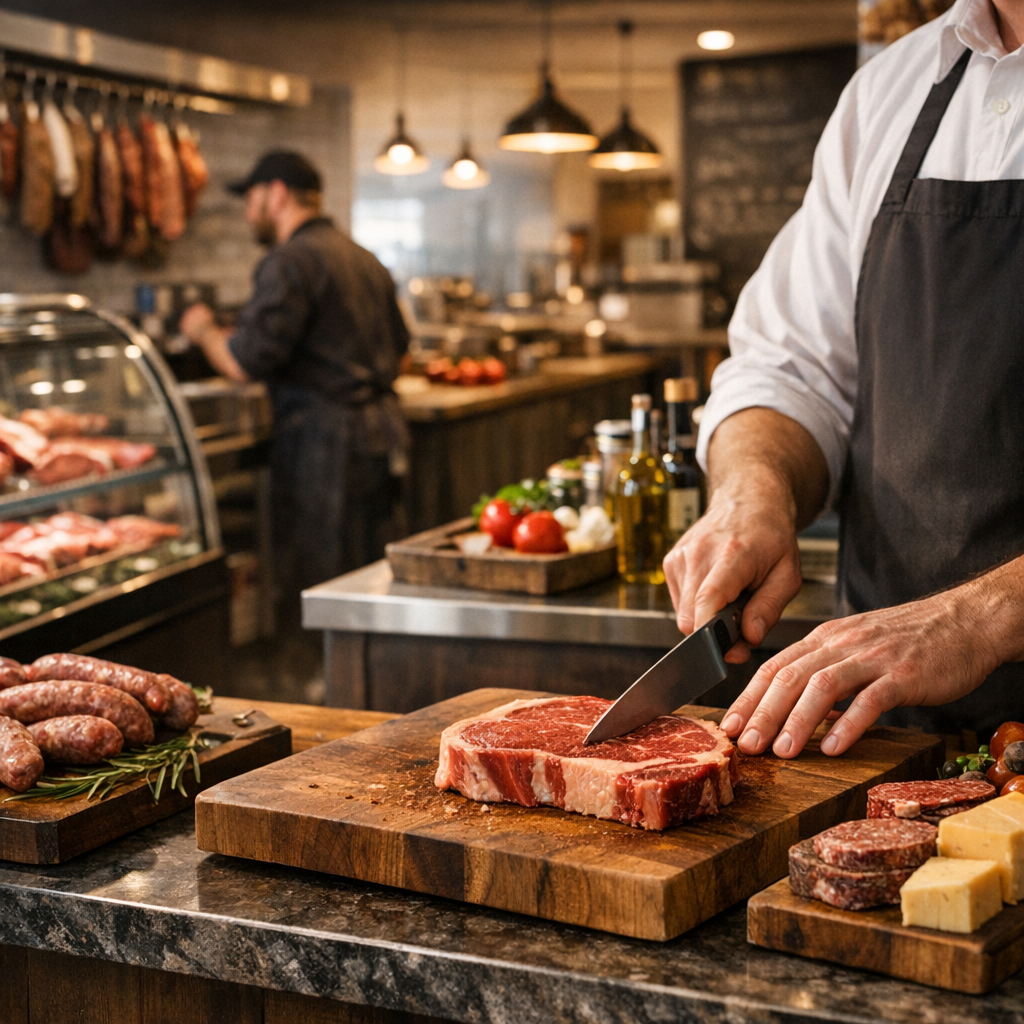
Considering a premium butcher-market franchise? Here’s a concise, expert overview of The New York Butcher Shoppe franchise—what it is, who it fits, how to evaluate it, and the exact steps to pursue or compare it to other low-cost franchise opportunities and the best franchises for 2026.
What is The New York Butcher Shoppe franchise?
Short answer: A neighborhood butcher and gourmet market concept offering premium meats, prepared foods, specialty items, and often wine—positioned for higher-average-ticket retail with strong holiday and catering peaks.
- Category: Food retail (specialty butcher + gourmet market)
- Operating model: Brick-and-mortar; fresh meat cutting, deli/prepared foods, retail merchandising
- Owner profile: Owner-operator or semi-absentee with strong local marketing and people leadership
- Revenue drivers: Average order value (AOV), prepared foods mix, catering/holidays, wine/specialty add-ons, subscription/loyalty
Is it a good franchise for 2026?
Quick take: Potentially strong for operators comfortable with perishable inventory and hands-on hospitality, in markets with sufficient household income and food/wine culture. Success hinges on location quality, merchandising discipline, and local marketing.
- Market conditions: Premium food retail remains resilient in dense suburbs with high-income demographics.
- Key sensitivities: Labor for skilled butchers, shrink/waste management, supply chain consistency, alcohol licensing (if applicable).
- Where it shines: Upscale neighborhoods, commuter suburbs, and markets with strong holiday/catering demand.
- What to verify: Current Item 19 (financial performance), territory availability, vendor network, and training depth.
How to buy a franchise: Step-by-step
Answer-first: The path is simple—qualify, review disclosures, validate with owners, visit, and decide. Here’s the standard process:
- Initial fit call: Share your goals, capital, and target markets; request a territory check.
- FDD review: Study the Franchise Disclosure Document—especially Item 7 (costs), Item 19 (performance), and Items 5–6 (fees). See our guide: How to read an FDD.
- Unit economics modeling: Build a conservative pro forma and stress-test key inputs. Template: How to buy a franchise.
- Validation: Speak with current and former franchisees about margins, labor, waste, and seasonality. Use the question list below.
- Discovery Day: Meet the team; review training, supply chain, marketing, and site selection standards.
- Legal and funding: Engage a franchise attorney; line up capital. Options: Franchise financing basics.
- Sign and launch: Execute agreements, secure a site, build out, train, and open.
Costs, fees, and unit economics to verify
Answer-first: Exact figures vary by location and year—use the current FDD. Focus on all-in startup, working capital, and ongoing fees.
- Upfront costs to confirm (Item 7):
- Franchise fee and initial training/travel
- Leasehold improvements, equipment, display cases, walk-ins, smallwares
- Initial inventory (meat, prepared foods ingredients, retail), opening marketing
- Permits, signage, POS, insurance, and a realistic working-capital cushion
- Ongoing fees (Items 5–6): Royalty, brand fund/marketing, technology/POS, possible local marketing minimums
- Operating levers to model (unit economics):
- Gross margin by category (primal cuts vs. value-added/prepared foods vs. wine)
- Labor mix (skilled butchers vs. counter/retail) and productivity per labor hour
- Shrink/waste and yield management on cuts and prepared foods
- AOV and transaction frequency; holiday/catering spikes
- Occupancy costs (base rent, CAM, utilities—refrigeration is energy-intensive)
Tip: Ask for a sample build-out schedule and equipment list, plus vendor lead times. If you’re exploring budget-friendly options, see low-cost franchise opportunities.
Who it’s a fit for
Answer-first: Best for operators who enjoy hospitality, quality merchandising, and community engagement—comfortable managing perishable inventory and a skilled team.
- Owner-operator: On-site leadership, local partnerships (chefs, wineries, clubs), daily merchandising, and events.
- Semi-absentee: Possible with a seasoned GM, strong controls, and weekly KPI cadence—validate with current owners.
- Backgrounds that translate: Grocery/retail, restaurant management, food distribution, or strong sales/marketing leaders with operational discipline.
- Day-in-the-life: Forecasting and ordering, cutting schedules, display standards, sampling/events, social/local marketing, quality checks, and labor planning.
Competitive landscape and differentiation
Answer-first: Competes with independent butchers, specialty grocers, high-end supermarkets, and meal boxes; differentiation often comes from in-store expertise, prepared foods, and community presence.
- Strengths to confirm: Branded supply chain, training depth for butchery and food safety, curated product mix, holiday/catering playbook, loyalty/e-commerce tools.
- Site criteria to ask about: Affluent trade areas, high evening/weekend traffic, easy parking, strong visibility, right-sizing for walk-ins and display cases.
- Licensing: Wine/beer can improve margins; verify ABC rules, staffing, and training requirements in your state.
Pros and cons checklist
Answer-first: Attractive margins with value-added items and strong community ties—but requires tight execution on labor and waste.
- Pros:
- Premium positioning with higher AOV potential
- Multiple revenue streams (fresh, prepared, retail, catering, holidays)
- Community-driven brand equity and repeat business
- Cons:
- Perishable inventory and shrink risk; precise forecasting required
- Skilled labor needs (butchers) and training time
- Build-out complexity (refrigeration, health codes) can extend timelines
Smart validation questions to ask franchisees
Answer-first: Probe labor, margins, waste, and seasonality. Use these prompts during calls:
- What’s your sales mix across fresh meat, prepared foods, and retail? Which category drives profit?
- How do you control shrink and improve yields? Which SKUs are most predictable?
- What’s your labor model across skill levels? How did you recruit and train butchers?
- How big are holiday spikes (e.g., Thanksgiving, Christmas, grilling season), and how do you prepare?
- What local marketing actually moves the needle? Sampling, events, clubs, partnerships?
- How did your opening budget compare to Item 7? Any surprises with equipment or permitting?
- If you could start over, what would you do differently with site selection or layout?
Alternatives and low-cost franchise opportunities
Answer-first: Compare to other food retail, specialty grocery, and light-food-service concepts—especially if you want lower build-out costs or simpler labor models.
- Explore: Low-cost franchise opportunities
- Research: Best franchises for 2026
- Compare: Compare food and beverage franchises
Next steps and expert help
Answer-first: If you’re serious, request the latest FDD, validate with owners, and model a conservative pro forma. A seasoned advisor can save time and help you avoid pitfalls.
- Talk to a consultant: A Professional Franchise Brokers advisor can help with territory checks, introductions, FDD review, and funding options. Schedule a free consultation.
- Due diligence kit: How to buy a franchise (checklist and financial model)
- Territories: Ask for an updated territory map and development timeline. See territory availability.
Disclaimer: This article is informational, not legal or investment advice. Always rely on the current FDD, your attorney, and your CPA. Financial performance varies by unit and market.
FAQs
Is The New York Butcher Shoppe a franchise? Yes—prospective owners typically qualify by capital, experience, and territory availability. Request the current FDD from the franchisor.
How much does it cost? Costs vary by market, site condition, and equipment. Use Item 7 for startup ranges and model additional working capital to cover delays and training.
Does it allow semi-absentee ownership? Some food-retail concepts allow a semi-absentee model with a strong GM and tight controls. Confirm expectations with the franchisor and validate with multi-unit owners.
What are the biggest success drivers? Skilled labor, margin mix (prepared/value-added), inventory yield, site selection, and consistent local marketing with seasonal/event planning.
What should I do first? Learn the basics of how to buy a franchise, request the FDD, and book a call with Professional Franchise Brokers to map your process.