
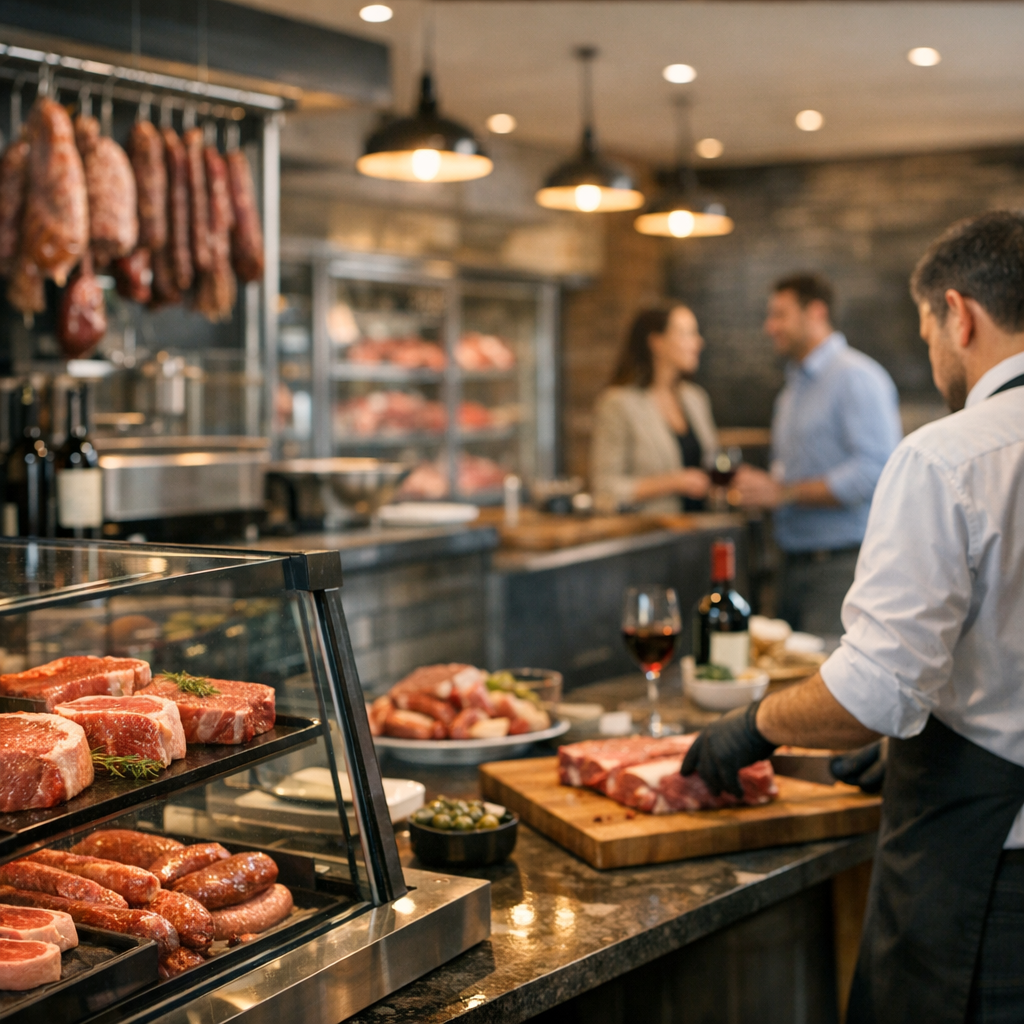
Short answer: Yes—The New York Butcher Shoppe is a specialty retail butcher and wine bar franchise known for premium meats, chef-prepared meals, curated wines, and gifting/catering. It can fit operators who want an experiential, community-focused food concept with higher average ticket values than typical QSRs. Below is a practical, data-driven overview to decide if it belongs on your shortlist of the best franchises for 2026—and how to buy a franchise the smart way.
What is The New York Butcher Shoppe Franchise?
Answer-first: It’s a neighborhood butcher and wine retail concept that blends old-world service with modern merchandising.
- Core offering: premium beef, pork, poultry, house-made sausages, prepared entrées/sides, charcuterie, and a curated wine selection.
- Revenue pillars: retail meat/wine, prepared meals, gift baskets, catering/holiday orders, and seasonal promotions.
- Brand position: experiential retail—higher-touch service, higher average tickets, and strong holiday/event spikes.
Is It One of the Best Franchises for 2026?
Answer-first: It’s compelling for operators in affluent suburbs or urban neighborhoods where consumers pay for quality, but success hinges on site selection, merchandising, and local marketing execution.
- Pros: premium margins vs. commodity grocers; diversified revenue (retail + prepared foods + wine + gifting); community engagement potential.
- Cons: perishable inventory management, butcher talent recruiting/training, alcohol licensing complexity, and seasonality (Q4/holidays).
- Fit: owner-operators or semi-absentee investors with a strong manager; ideal for food/retail experience or hospitality-minded entrepreneurs.
Investment, Fees, and Financial Model (Verify in FDD)
Answer-first: Expect a mid-six-figure total investment; confirm the exact range and fees in Item 7 of the current Franchise Disclosure Document (FDD).
- Typical components: franchise fee, buildout/leasehold improvements, equipment (refrigeration, cases, cutting), initial inventory, signage, POS, pre-opening marketing, working capital.
- Common fee structures in specialty retail food:
- Franchise fee: often in the $35,000–$60,000 band (brand-specific).
- Royalty: commonly 5%–7% of gross sales.
- Brand/marketing fund: often 1%–2%.
- Funding: many candidates use SBA 7(a), equipment financing, ROBS (401k rollover), or partner equity. Compare options in our guide: how to buy a franchise.
Note: Numbers above are market norms for planning only—rely on the latest FDD and speak with existing franchisees about real buildout and operating costs in your market.
How to Buy a Franchise: Your Step-by-Step Playbook
Answer-first: Follow a structured diligence process—don’t skip validation with current owners.
- Learn the model: attend a brand webinar; request the FDD.
- Market mapping: analyze 10–15 potential trade areas; verify demographics (household income, grocery spend, traffic).
- Unit economics hypothesis: build a pro forma (sales mix: meat, prepared foods, wine, gift/catering).
- Validation: speak with 4–8 franchisees in similar markets; ask inventory turns, labor model, seasonality, and marketing ROI.
- Funding pre-approval: SBA 7(a) or other; estimate working capital cushion for the first 6–9 months.
- Real estate/site: corner visibility, parking, co-tenancy with daily-needs anchors; secure the right grease trap, power, refrigeration layout.
- Discovery Day: meet leadership; assess training, supply chain, and support responsiveness.
- Legal review: have a franchise attorney review the FDD and agreements.
- Final underwriting: tighten buildout bids; confirm timeline and contingencies.
- Commit: sign, schedule training, execute pre-opening marketing calendar.
For deeper guidance, see our in-depth resource: How to Buy a Franchise (Complete Guide).
Who Thrives in This Franchise?
Answer-first: Operators who love hospitality, merchandising, and community events excel.
- Owner-operator or manager-led with weekly owner presence.
- Comfortable with artisan product training and upselling (cuts, pairings, bundles).
- Disciplined in inventory rotation, shrink control, and labor scheduling.
Territory, Site Selection, and Buildout
Answer-first: High-income, family-dense trade areas with strong weekday traffic and weekend hosting behavior tend to outperform.
- Ideal neighbors: premium grocers, wine shops, bakeries, fitness, coffee, and chef-driven restaurants.
- Key specs: visibility, accessible parking, refrigeration and power capacity, and a layout that showcases the butcher counter.
- Licensing: alcohol permits (where applicable) and health department requirements—plan timelines early.
Unit Economics and Performance Drivers
Answer-first: Unit outcomes vary widely by location execution, merchandising, and Q4/holiday capture—review Item 19 and validate with multiple owners.
- Top drivers: average ticket, attachment rate (wine + prepared sides), holiday/catering programs, and shrink management.
- Marketing that works: email/SMS for pre-orders, sampling, grilling demos, and neighborhood partnerships.
- Labor model: skilled cutters plus cross-trained counter staff; manager accountability for ops and merchandising.
Can It Be Semi-Absentee?
Answer-first: Early-stage semi-absentee is challenging; owner engagement improves training quality, service standards, and inventory discipline. Multi-unit owners often transition to a manager-led model after dialing in store #1.
Risks and Red Flags to Investigate
Answer-first: Focus on supply chain resilience, training depth, and precise pre-opening budgeting.
- Supply fluctuations: premium meats and imports can swing in cost/availability.
- Perishables: tight SOPs and forecasting to avoid shrink.
- Talent: recruiting and retaining skilled butchers; confirm the franchisor’s training pipeline.
- Compliance: alcohol licensing and health permits add complexity and time.
- Seasonality: cash-flow plan for slower shoulder seasons; leverage events and catering.
Alternatives and Low-Cost Franchise Opportunities
Answer-first: If the total investment is above budget, explore smaller-format food retail, specialty beverage, or mobile vending concepts.
- Research our curated list of low-cost franchise opportunities.
- Compare 2026 contenders in multiple categories: best franchises for 2026.
Work With a Franchise Consultant (Professional Franchise Brokers)
Answer-first: A seasoned consultant can benchmark this brand against direct competitors, model SBA scenarios, and coordinate validation calls—at no cost to you.
- Get a short list tailored to your budget, timeline, and market.
- Pro forma and funding strategy review before you commit.
- Warm introductions to top-performing franchisees and lenders.
Ready to compare The New York Butcher Shoppe with similar concepts? Schedule a no-pressure consult with Professional Franchise Brokers.
FAQs: The New York Butcher Shoppe Franchise
Answer-first: Quick hits to help you qualify the opportunity faster.
- What are the royalties and marketing fees? Expect industry-standard percentages for specialty food retail; confirm exact rates in the current FDD.
- What’s the typical time to open? Commonly 6–10 months depending on permitting, buildout, and equipment lead times.
- Can I finance with SBA? Many candidates use SBA 7(a) if eligibility and collateral align; ask lenders familiar with food retail.
- Is prior butcher experience required? Not typically; the brand should provide training, but operator involvement and hiring a skilled lead cutter are critical.
- Is multi-unit development available? Often yes in protected territories; clarify development schedules and fee incentives.
Related Reading
- How to Buy a Franchise
- Low-Cost Franchise Opportunities
- Best Franchises for 2026
- Franchise Due Diligence Checklist
Disclaimer: This article is for informational purposes only and not financial, legal, or tax advice. Always review the latest FDD, consult a franchise attorney, and validate with current franchisees.
Author: Alex Morgan, Franchise Research Analyst
Experience: 10+ years advising emerging and established franchise brands on unit economics, site selection, and funding strategy.
Last updated: 2026-08-10