
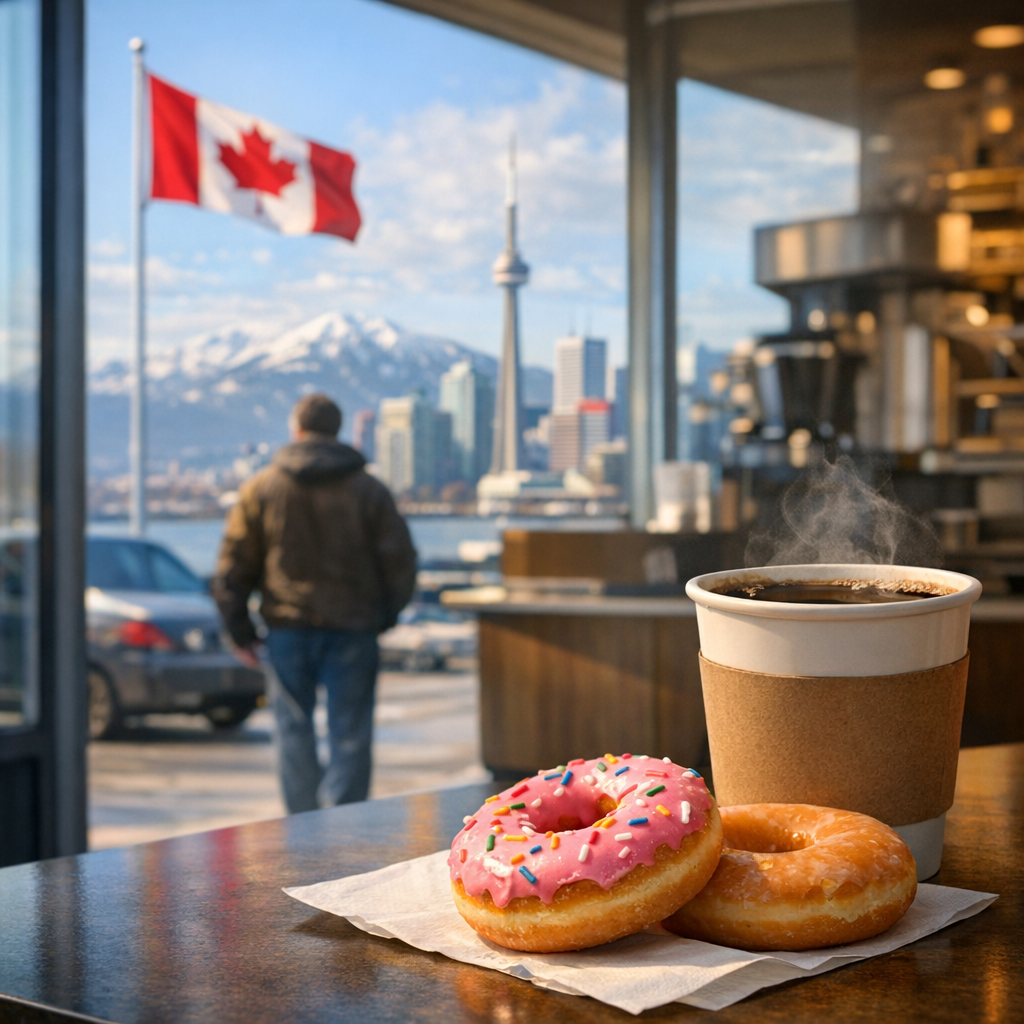
Short answer: Dunkin’ is preparing a Canadian comeback. Here’s what that means for consumers and for operators researching how to buy a franchise in Canada, including costs, timelines, and whether this could be one of the best franchises for 2026.
Quick Take: Is Dunkin’ really coming back to Canada?
Yes—industry signals and brand communications point to a structured re-entry focused on major metros and experienced multi-unit operators. Exact launch dates, territories, and formats are typically finalized in phased waves. If you’re evaluating the opportunity now, prepare your capital stack, site pipeline, and operations plan so you’re “deal-ready” when territories open.
- Expect priority for multi-unit development agreements in Toronto, Vancouver, Calgary/Edmonton, Ottawa, and Montreal.
- Likely formats: end-cap with drive-thru, inline urban, and select non-traditional (transit, campus, travel plaza).
- Operator profile: strong QSR/coffee experience, proven unit economics, and access to local development/supply chain partners.
What a Dunkin’ comeback means for Canadian consumers
Bottom line: More breakfast and beverage choice, aggressive value plays, and tech-forward loyalty.
- Broader morning/bakery selection with hot/iced beverages and on-the-go convenience.
- Price/value competition that can pressure rivals to sharpen offers.
- Mobile order-ahead, drive-thru optimization, and loyalty rewards depth.
Franchise opportunity at a glance (operator view)
Summary: High-capital, operations-intensive, multi-unit play; not a “low-cost franchise opportunity.”
- Capital: Full build-out for drive-thru cafes can run high; plan for seven-figure total project costs per site in top metros (landlord TI can offset).
- Unit economics: Throughput, beverage mix, drive-thru speed, and labor management drive margins.
- Fees/royalties: Expect typical QSR royalty/advertising ranges; confirm in the brand’s current disclosure documents.
- Supply chain: Coffee, bakery, and commissary logistics are critical in early-market ramp.
How to buy a Dunkin’ franchise in Canada (step-by-step)
Do this first: Pre-qualify your finances and assemble an experienced operating team.
- Pre-qualification: Document net worth, liquidity, and credit lines; align partners and investors.
- Territory targeting: Map priority trade areas with demographic and traffic data.
- Apply to the brand: Submit operator resume, financials, market plan, and store development timeline.
- Discovery: Attend brand meetings; review concept fit, operations, technology, and support.
- Diligence: Analyze the latest disclosure documents, fee schedules, and development agreement terms.
- Unit economics modeling: Build conservative pro formas with rent, labor, COGS, and marketing scenarios.
- Real estate pipeline: Identify 3–5 viable sites per unit; engage brokers and landlords early.
- Financing: Line up bank/SBA-equivalent financing, vendor financing, or private capital.
- Build and open: Manage permits, equipment, hiring/training, and pre-opening marketing.
- Optimize: Track ops KPIs (speed of service, product mix, labor %) from week one.
New to franchising? See our guide: How to Buy a Franchise.
Costs and unit economics: what to expect
Key idea: Budget conservatively; cash requirements for first-year operations often exceed initial projections.
- Build-out and equipment: Drive-thru sites command higher capex; urban inline may lower capex but can increase rent.
- Working capital: Reserve 6–12 months of operating capital to weather seasonality and ramp.
- Revenue drivers: Morning daypart, beverage attachment, and loyalty participation.
- Labor: Forecast staffing by daypart; cross-train to stabilize costs.
Compare alternatives by price point in our roundup of low-cost franchise opportunities.
Competitive landscape: Dunkin’ vs. Tim Hortons, Starbucks, and McCafé
Fast take: Dunkin’ competes on speed, value, and beverage variety; local market share dynamics will vary by trade area.
- Tim Hortons: Massive footprint and brand loyalty; real estate primacy in many suburbs.
- Starbucks: Premium positioning; strong urban presence and digital loyalty.
- McCafé: Value-driven coffee attached to high-traffic restaurants.
See our head-to-head analysis: Coffee Franchise Comparison.
Best franchises for 2026: where Dunkin’ fits
Outlook: If the rollout proceeds as planned, Dunkin’ could rank among the best franchises for 2026 in Canada for experienced QSR operators, especially in drive-thru-centric corridors.
- Strengths: Brand recognition, beverage-led margins, robust loyalty engine.
- Constraints: Real estate competition, capital intensity, supply chain scale-up.
Risks and watchouts
Reality check: Returns depend on execution and market conditions.
- Real estate scarcity in prime corridors can delay openings and inflate rent.
- Construction timelines and costs can exceed estimates; bake in contingencies.
- Localized brand awareness may lag early; invest in community and digital marketing.
Legal and regulatory considerations in Canada
Action: Align with provincial franchise disclosure laws before signing anything.
- Disclosure: Comply with provincial statutes (e.g., Ontario, Alberta, BC, Manitoba, New Brunswick, PEI).
- Entity setup and employment standards: Confirm payroll, scheduling, and privacy requirements.
- Trademark and leasing: Review assignment, personal guarantees, and co-tenancy clauses.
Read our Canada Franchise Law Guide and consult a franchise attorney.
Not ready for a high-capex build? Explore low-cost franchise opportunities
Alternative path: Start smaller, learn multi-unit fundamentals, and scale into bigger brands later.
- Service and mobile concepts with low build-out costs
- Kiosk and non-traditional models
- Home-based franchises
Browse our curated list of low-cost franchise opportunities.
Work with a franchise consultant
Strong recommendation: Engage a consultant early to validate fit, model economics, and secure priority territories. Our partner Professional Franchise Brokers can:
- Pre-qualify your capital stack and operator profile
- Prepare territory applications and deal materials
- Vet unit economics, negotiate terms, and coordinate legal review
Book a no-obligation strategy call with Professional Franchise Brokers.
FAQs: Dunkin’ in Canada
Quick answers to common questions
- When will stores open? Timelines are typically phased by market; expect priority metros first. Join the brand’s interest list and monitor development news.
- How much does a Dunkin’ franchise cost in Canada? Expect high capex for drive-thru formats. Confirm the latest ranges in current disclosure documents; costs vary by site, market, and landlord contributions.
- Is Dunkin’ offering master or area development rights? Early entries often favor multi-unit development agreements. Terms are market-specific—discuss with the brand and your consultant.
- How do I get started? Assemble financials, outline your market plan, and speak with a consultant. See our guide: how to buy a franchise.