
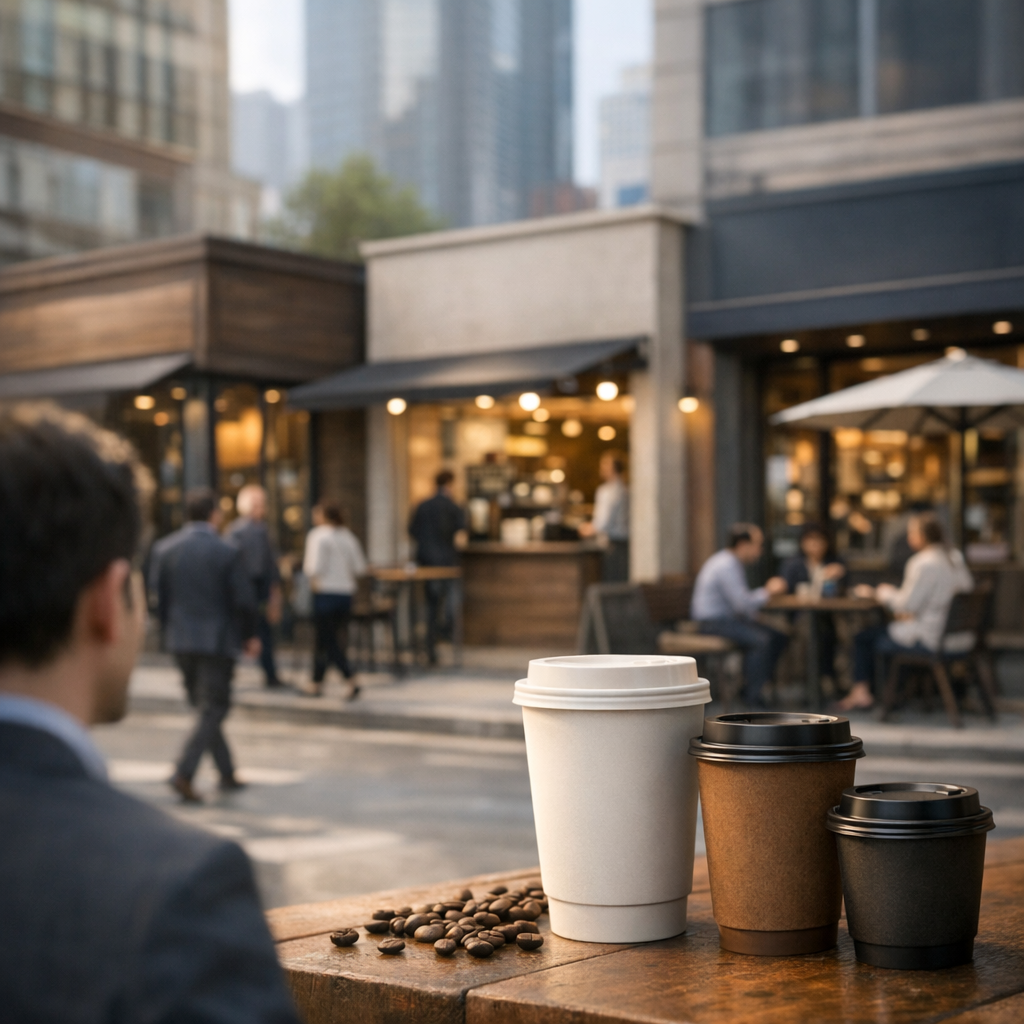
Short answer: No—there aren’t “too many” coffee franchises everywhere. Some zip codes are saturated, but strong unit economics, differentiated concepts, and the right trade areas still support new stores. The opportunity depends on local demand, competition, and execution.
What “too many” coffee franchises really means
Answer first: A market is “too crowded” when an additional store can’t reach sustainable sales without cannibalizing existing demand or discounting heavily.
- Supply vs. demand: If the coffee-shop density outpaces population, daytime workforce, and commuter traffic, new units struggle to hit pro-forma targets.
- Convenience saturation: When drive‑thru coverage and mobile pick-up options are already ubiquitous, convenience “white space” shrinks.
- Price-band crowding: If every operator competes in the same $4–$6 beverage tier, margin pressure rises.
- Format overlap: Redundancy among similar footprints (e.g., 1,200–1,600 sq ft inline stores) accelerates cannibalization.
- Brand concentration: High concentration of a single chain with strong loyalty and app engagement can box out new entrants.
How to evaluate saturation in your trade area
Answer first: Run a five-factor screen before spending on site selection.
- Map competitors and formats: Identify every coffee provider (chains, independents, bakeries, convenience stores) and note drive‑thru, inline, and kiosk footprints.
- Quantify demand drivers: Population and daytime workforce within 5–10 minutes; schools, hospitals, big-box anchors; AM/PM traffic counts.
- Measure convenience gaps: Left-in/left-out access, stacking room for drive-thru queues, curbside, and parking density.
- Assess price tiers and product mix: Where are premium espresso, blended beverages, and food attachment (breakfast sandwiches, bakery) under-served?
- Check brand loyalty signals: App usage, rewards penetration, and review velocity can indicate entrenched incumbents.
Tip: Pair mobile-location data with DOT traffic counts to estimate realistic AM/PM dayparts. Validate against landlords’ sales comps and FDD Item 19 where available.
Unit economics that still work in 2026
Answer first: Formats that optimize throughput (drive‑thru), boost attachment (food + seasonal beverages), and leverage digital ordering remain resilient.
- Average unit volume (AUV): Often supported by a strong AM peak plus secondary PM/late-night daypart where applicable.
- COGS: Commonly in the mid‑20s to low‑30s percent depending on bakery integration and waste control.
- Labor: Frequently mid‑20s to ~30% with tight scheduling around dayparts and effective bar flow.
- Occupancy: High-rent corridors push toward low double digits; drive‑thru pads can offset with higher throughput.
- EBITDA margins: Mature stores often target low‑ to mid‑teens, but vary widely by market and execution.
Note: Always underwrite with conservative sales ramps, rising buildout costs, and permitting timelines.
Where the white space is
Answer first: Underserved convenience nodes and nontraditional venues show the most upside.
- Suburban arterials lacking drive‑thru coverage or easy left‑turn access.
- College, medical, and tech campuses needing high-frequency beverage and snack options.
- Co‑located builds with gas/C‑stores and grocery pads where rent-to-sales can pencil.
- Transit-adjacent sites catching both morning and late-PM dayparts.
- Small-footprint kiosks in office towers or multi-family lobbies for low capex pilots.
How to buy a franchise in a crowded category
Answer first: Start with unit economics, territory protection, and a sober site model—then validate with operators.
- Study the FDD (Item 7 for startup costs, Item 19 for financial performance representations).
- Build a store-level model: sales by daypart, food attachment, loyalty participation, delivery mix, and coupon exposure.
- Interview 5–10 multi-unit franchisees in similar markets; ask about buildout overruns, staffing, and marketing ROI.
- Pressure-test territory: exclusive area definitions, encroachment policies, and cannibalization clauses.
- Run sensitivity: rent + 200 bps, labor + 150 bps, 10% sales downside. Ensure DSCR remains acceptable.
Deep dive: See our step-by-step guide on how to buy a franchise with checklists and pro formas.
Low-cost franchise opportunities in coffee
Answer first: Look at kiosks, carts, and co-locations to reduce capex and time-to-open.
- Kiosks and carts in offices, hospitals, and universities (often lower buildout, quicker permits).
- Co-branded concepts inside markets or fuel stations with shared back-of-house.
- Modular or prefab drive‑thru sheds that compress construction timelines.
Explore our curated list of low-cost franchise opportunities and compare total investment ranges.
Best franchises for 2026: what to look for
Answer first: Prioritize brands with defensible convenience, strong digital, and disciplined growth.
- Territory discipline: Clear white-space planning and guardrails against overbuilding.
- Digital flywheel: High loyalty adoption, personalized offers, and mobile order-ahead.
- Supply chain depth: Stable espresso, dairy, and bakery inputs with regional redundancy.
- Format flexibility: Drive‑thru, inline, kiosk—right box for each trade area.
- Operator economics: Transparent KPIs and field support to improve throughput and margins.
See our data-backed picks for the best franchises for 2026 by category and investment level.
Risks and red flags
Answer first: Overexpansion, weak territory protection, and underestimated buildouts sink returns.
- Rapid brand expansion without traffic-led site selection.
- Thin territories or fuzzy encroachment rules.
- Permitting delays and cost inflation on mechanical, electrical, and plumbing.
- Overreliance on discounting to drive traffic.
- Lack of local store marketing playbooks beyond national ads.
FAQs about coffee franchise saturation
Answer first: Here are concise responses to the questions investors ask most.
- Q: Are big cities tapped out?
A: Prime corridors often are, but second-ring suburbs and commuter nodes can still support drive‑thru formats. - Q: Can independents beat franchises?
A: Yes—on product uniqueness and community—but franchises win on convenience and repeatability. - Q: What’s a fast way to test demand?
A: Weekend pop-ups or carts in your target area to measure ticket size and daypart velocity. - Q: Is delivery meaningful for coffee?
A: It’s incremental, but margin-dilutive; prioritize order-ahead pick-up and drive‑thru first.
Take the next step
Answer first: Get an unbiased, numbers-first view before you commit capital.
Speak with a seasoned franchise advisor to validate markets, model unit economics, and negotiate territory protections. Book a complimentary consult with Professional Franchise Brokers—and make your next move with confidence.
Related resources: How to Buy a Franchise | Low-Cost Franchise Opportunities | Best Franchises for 2026