
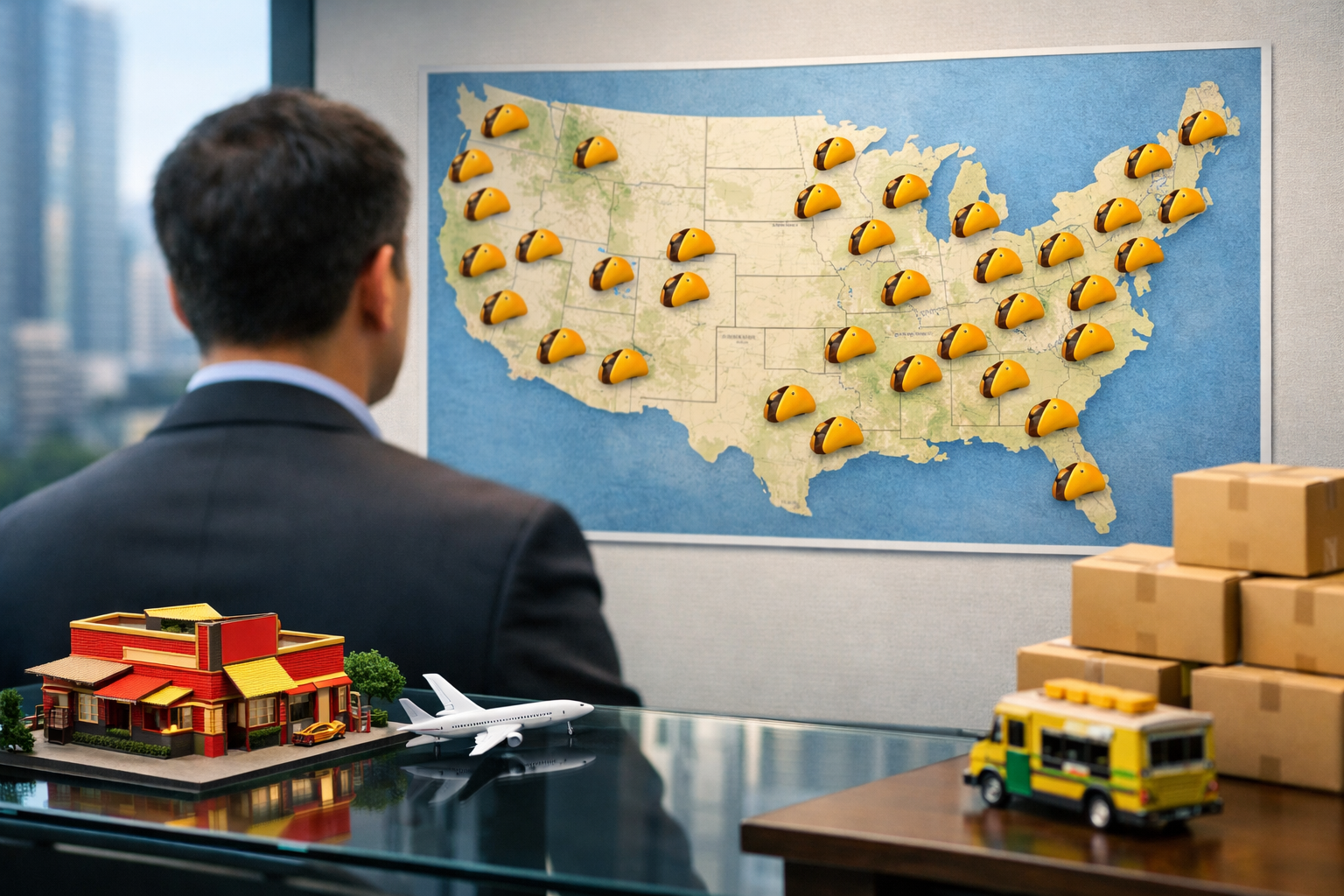
Short answer: Mike’s Red Tacos has announced plans to expand its franchise system nationwide, opening new territories across multiple regions. Below is a concise, expert guide on how to buy a franchise with the brand, typical costs to expect, who the concept fits best, and how this move could position it among the best franchises for 2026.
What’s happening: Mike’s Red Tacos is going national
Mike’s Red Tacos is preparing a multi-market rollout, inviting qualified operators to secure territories as part of a national franchise expansion. Early interest typically centers on high-traffic suburban corridors and mixed-use urban neighborhoods with strong lunch and late-night demand.
- Concept focus: fast-casual tacos, streamlined kitchen, takeout/delivery friendly
- Expansion model: franchised locations with protected territories
- Next steps: request the Franchise Disclosure Document (FDD) and territory map
Why this matters for franchise buyers
For qualified operators, countrywide expansion signals earlier access to prime territories and potential multi-unit development opportunities.
- First-mover advantages in select DMAs
- Brand momentum that can elevate local marketing reach
- Operational playbooks often refined during regional pilots
How to buy a Mike’s Red Tacos franchise
Start with a discovery call, then complete the brand’s qualification process and territory review.
- Visit our guide: how to buy a franchise to prep financials and due diligence questions.
- Submit an inquiry to request the FDD, sample build-out timeline, and territory availability.
- Attend a discovery day; meet leadership, operations, and marketing teams.
- Validate with existing franchisees about unit economics, training, and support.
- Engage legal review of the FDD (Items 5–7, 12, 17, 19) and negotiate development schedule.
- Sign the franchise agreement and finalize site selection, financing, and training dates.
Estimated investment and fees
Expect total project costs similar to fast-casual taco concepts; exact figures will be in the brand’s FDD Item 7.
- Initial franchise fee: see FDD Item 5 (varies by territory and multi-unit deals)
- Build-out, equipment, and signage: review typical ranges in Item 7; costs vary by market and footprint
- Royalties and marketing fund: Item 6 details ongoing fees and ad contributions
Tip: Compare these ranges against other low-cost franchise opportunities to calibrate ROI and ramp-up time.
Ideal franchisee profile
Operators with foodservice or multi-unit experience typically ramp faster, but strong general managers can bridge gaps for first-time owners.
- Operational discipline and KPI tracking (labor %, food cost, throughput)
- Hands-on leadership during the first 6–12 months
- Capital readiness for contingencies (build-out overruns, marketing push)
- Real estate savvy or a broker partner for high-visibility sites
Territories and timeline
Priority markets usually include metro areas with strong delivery density and late-night foot traffic.
- Urban infill and suburban power centers near universities, hospitals, and office corridors
- Timeline: aim for 6–10 months from agreement to opening, depending on permitting and construction
- Multi-unit development schedules may front-load site selection and staffing
Training and support
Expect pre-opening training, grand opening marketing, and ongoing field support as outlined in the FDD.
- Kitchen systems: line setup, prep standards, and speed-of-service benchmarks
- Technology: POS, delivery integrations, and performance dashboards
- Marketing: launch playbooks, LTO cadence, and influencer/UGC strategy
Risks—and how to de-risk your decision
Newer brands can carry higher volatility; mitigate with disciplined diligence and conservative planning.
- Validate unit economics with multiple franchisees, including recent openings
- Stress test pro formas for rent escalations and 10–15% build-out overruns
- Negotiate performance-based TI or free rent with landlords where possible
- Secure a strong GM and cross-train early to reduce single-point failures
Is Mike’s Red Tacos among the best franchises for 2026?
Potentially—if the brand sustains strong unit economics and training quality through scale.
- Criteria to watch: cash-on-cash returns, payback period, and same-store sales comps
- Operations: food cost control, throughput at peak, and delivery margins
- Brand moat: menu differentiation and social buzz that lowers customer acquisition costs
See our curated list of the best franchises for 2026 to benchmark opportunities side-by-side.
Alternatives and low-cost options
If build-out budgets run high in your market, compare lightweight concepts with smaller footprints or mobile formats.
- Ghost-kitchen or kiosk variants to reduce capex
- Non-restaurant low-cost franchise opportunities with faster ramp-up
- Multi-unit deals with stepped opening schedules to ladder cash flow
Due diligence checklist (answer-first highlights)
Request the FDD, validate with multiple owners, and model conservative pro formas.
- Obtain and read the Franchise Disclosure Document (FDD)—focus on Items 5–7, 12, 17, 19
- Owner validation: at least 4–6 calls across different markets and opening cohorts
- Real estate underwriting: visibility, access, parking, daypart mix
- Financial modeling: sensitivity analysis on sales, labor, COGS, delivery mix
- Legal review: franchise attorney to clarify transfer rights, renewals, and defaults
- Operational plan: staffing, training calendar, pre-opening marketing budget
Work with a franchise consultant
Get expert guidance, territory intel, and deal support at no additional cost to you. Professional Franchise Brokers can help you:
- Access up-to-date territory maps and FDDs
- Benchmark unit economics vs. peer brands
- Prepare validation questions and pro forma templates
Schedule a free consultation or call +1 (000) 000-0000.
Frequently asked questions
Is financing available? Many franchisees blend SBA 7(a)/504 loans, landlord TI, and equipment financing. Discuss eligibility with your lender and confirm brand approval requirements.
How long does it take to open? Plan for 6–10 months depending on site selection, permitting, construction, and training. Your market’s permitting timeline is the biggest variable.
What experience is required? Foodservice or multi-unit background helps, but strong operators with a capable GM and brand training can succeed. The brand will specify minimums in the FDD.
Is Item 19 included? Most growth-minded brands include financial performance representations; verify in the current FDD and validate with existing owners.
Related reading:
- How to Buy a Franchise: Step-by-Step
- Low-Cost Franchise Opportunities You Can Start This Year
- Best Franchises for 2026: Our Shortlist