
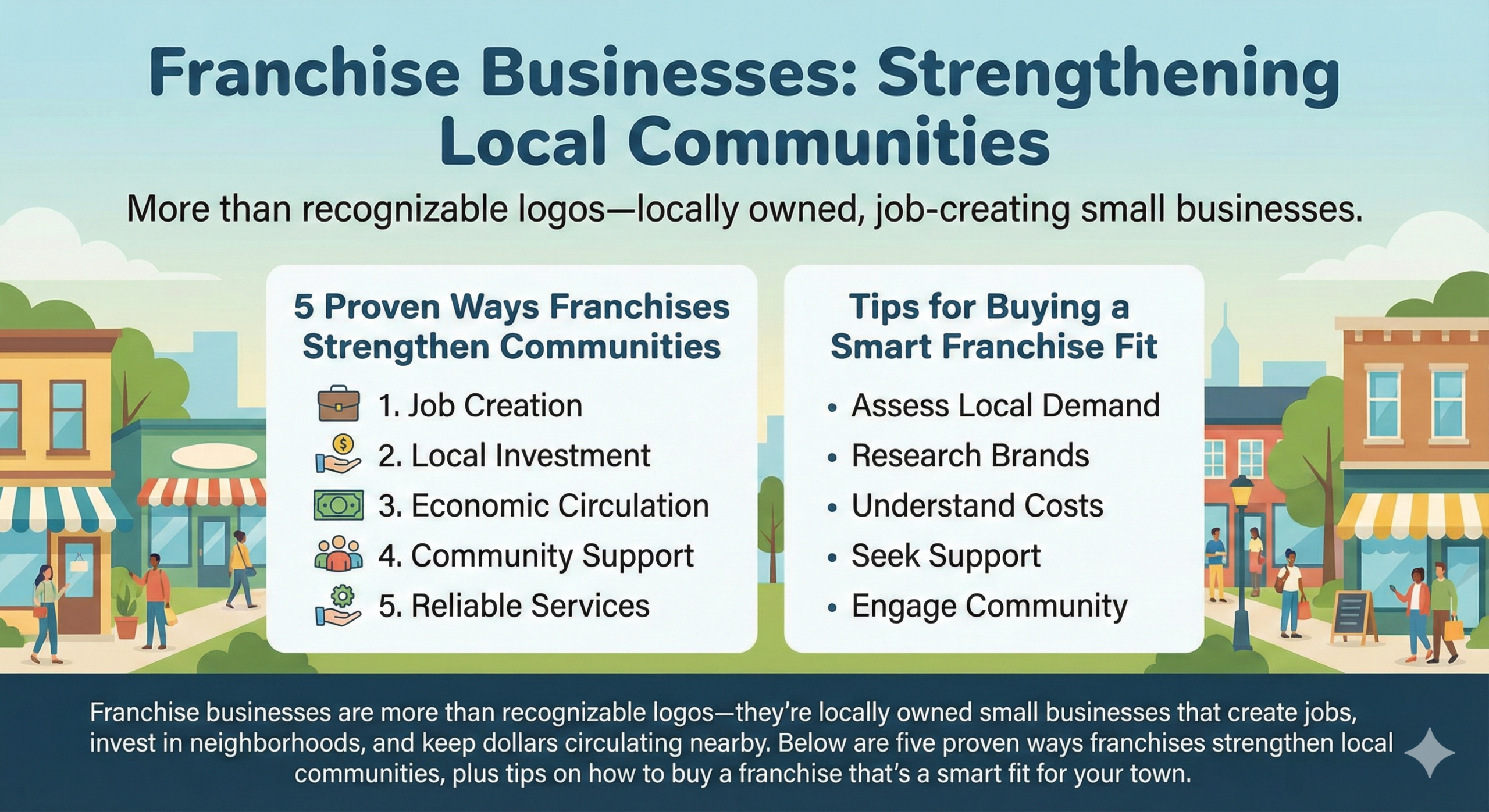
Franchise businesses are more than recognizable logos—they’re locally owned small businesses that create jobs, invest in neighborhoods, and keep dollars circulating nearby. Below are five proven ways franchises strengthen local communities, plus tips on how to buy a franchise that’s a smart fit for your town.
5 Ways Franchise Businesses Help Local Communities
- Job Creation and Career Pathways
Franchises consistently open new roles, from part-time entry-level positions to salaried management—and they bring standardized training that elevates skills across the local labor market.
- Reliable entry-level jobs for students, career starters, and career changers
- Clear advancement paths into shift lead, manager, and multi-unit operator roles
- Transferable training in customer service, operations, and leadership
- Local Spending Through Vendors and Services
Even when brands have national purchasing, local franchisees still hire nearby accountants, contractors, printers, and marketing agencies—keeping a meaningful share of revenue in town.- Ongoing work for local trades (HVAC, cleaning, IT support, maintenance)
- Partnerships with local farms, bakeries, or suppliers where brand standards allow
- Multiplier effect as employees spend wages with other neighborhood businesses
- Community Giving and Events
Franchise owners live in the communities they serve. They sponsor youth sports, host fundraisers, and donate product and space for local causes—adding reliable support to civic life.- In-kind donations to schools, nonprofits, and first responders
- Fundraising nights that share a portion of sales with local organizations
- Volunteer drives and seasonal giving campaigns
- Main Street Revitalization
Well-run franchises activate vacant storefronts, increase foot traffic, and anchor retail corridors. Their consistent branding and hours signal vitality to other investors and to residents.- Infill development and improved curb appeal
- Shared marketing that lifts nearby independent shops
- More reasons for locals to stay and spend in their own neighborhood
- Accessible Entrepreneurship
Franchising lowers barriers to ownership with proven systems, training, and support—helping new entrepreneurs, veterans, women, and minorities build equity in their communities.- Playbooks that shorten the learning curve and reduce startup risk
- Mentorship from experienced franchisees and field consultants
- Entry points via low-cost franchise opportunities and resales
How to Buy a Franchise That Strengthens Your Community
If you’re researching how to buy a franchise, evaluate both profit potential and local impact. Use this checklist to align brand choice with neighborhood needs:
- Market fit: Does the concept solve a local problem or fill a gap in services?
- Unit economics: Validate margins, break-even timelines, and multi-unit potential.
- Job quality: Look for brands promoting training, advancement, and stable scheduling.
- Local sourcing: Ask what can be purchased from local vendors within brand standards.
- Brand reputation: Review FDD Item 20 performance trends and talk to current owners.
- Community policy: Confirm support for fundraisers, sponsorships, and cause marketing.
Pro tip: Work with a seasoned franchise consultant such as Professional Franchise Brokers. They’ll match your goals and budget with vetted brands, explain the FDD, and help you compare low-cost franchise opportunities versus higher-capital concepts—saving you time and costly missteps.
Best Franchises for 2026: What to Look For
When exploring the best franchises for 2026, focus on resilient, community-serving categories and scalable models:
- Essential and recurring services: home maintenance, health and wellness, pet care
- Education and youth activities: tutoring, STEM, enrichment, sports
- Senior services: in-home care, mobility solutions, accessibility remodeling
- Eco-forward concepts: energy efficiency, EV services, sustainable packaging
- Tech-enabled operations: strong unit dashboards, marketing automation, and CRM
Selection tips:
- Prioritize brands with transparent unit economics and strong validation from owners.
- Check territory protections and multi-unit expansion pathways.
- Assess training depth, local marketing playbooks, and field support responsiveness.
- Ensure the brand’s values and community engagement align with yours.
Not sure where to start? A quick discovery call with Professional Franchise Brokers can narrow options and align you with the right category for your market and budget.
Next Steps
- Clarify your goals, capital, and timeline.
- Request brand overviews and FDD summaries for 3–5 vetted concepts.
- Speak with current franchisees about support, marketing, and profitability.
- Visit top candidates, meet the leadership team, and confirm community fit.
- Engage franchise-savvy legal and financial advisors before you sign.
Franchising can be both profitable and profoundly local. If you’re exploring how to buy a franchise that creates jobs and revitalizes your neighborhood, consider partnering with Professional Franchise Brokers to compare the market’s strongest options—including low-cost franchise opportunities and the best franchises for 2026.